
How Much Does It Cost to Build an Online Store in 2026 (and What Actually Determines the Price)
Building an online store doesn’t have a single fixed price. It depends on the goals, the functionality, the integrations, and the level of customization.
How much does it really cost to build an online store?
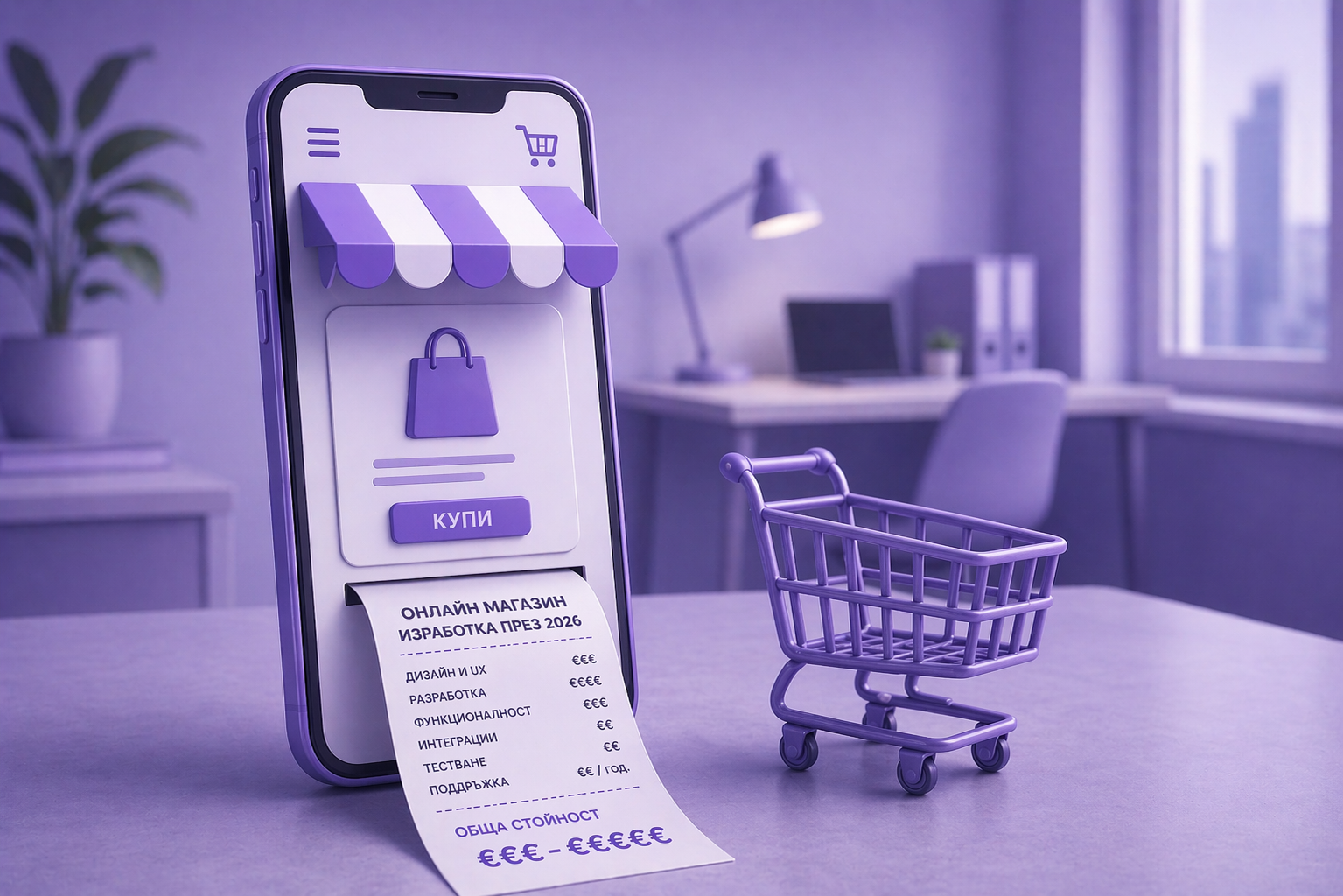
This is one of the most common questions from business owners who want to start selling online. And it's completely logical. Before you invest, you want to know what budget you'll need, what you'll get in return, and whether there's a risk of paying for something that won't work well.
The truth is, there's no single universal price for an online store. There's a range. That range depends on many factors — how complex the project is, what functionality it'll have, what kind of design you're after, how many integrations are needed, and whether the store has been built with future growth in mind.
That's exactly why the question isn't just "How much?", but "What's actually included in the price?" Because two online stores can look similar at first glance, but in reality sit at completely different levels in terms of structure, usability, speed, and room for growth.
"The truth is, there's no single universal price for an online store. There's a range."
What an online store actually includes
Many people picture an online store as "a site with products and an order button." In reality, a good eCommerce project is much more than that.
A real online store typically includes:
- UX structure and user journey logic
- design aligned with your brand
- development of the core pages and features
- product structure, categories, and filters
- cart, checkout, and the order flow
- payment and delivery integrations
- SEO foundations
- speed optimization
- mobile version
- room for future expansion
In other words, it's not just a "site." It's a commercial tool. And if it's built right, it doesn't just have an online presence — it works for your sales.
Why there's no single fixed price
The reason there's no single set price is simple: every business has different needs.
An online store with 20 products, a few categories, and a standard cart is a completely different project from a store with 1,000 products, filters, B2B logic, an ERP connection, multiple pricing tiers, promotional mechanics, and automations.
So the price isn't set by the fact that there'll be "an online store" — it's set by what that store actually needs to be able to do.
1. Project complexity
The first and most important factor is complexity.
The more complex the store's structure, the more time and expertise are needed to build it.
Number of products
If you have a small catalog, organization is easier. But when there are a lot of products, the following start to matter:
- how they're organized
- how they're searched
- how they're filtered
- how variations and attributes are displayed
A large product count often requires better information architecture, carefully built categories, and a more solid technical foundation.
Categories and subcategories
A simple structure is easy to execute. But when you have many levels, different product types, or category-specific logic, the project becomes more detailed.
A good category isn't just a "folder." It affects navigation, SEO, user behavior, and conversions.
Filters and search
Filters might look like a small detail, but in many stores they're critically important — especially with a larger product range.
Filters by size, color, price, brand, application, material, or technical specs require better logic and more careful implementation. This also affects the final price.
2. Functionality
The next big factor is the features the store needs to offer.
The more specific your business needs are, the more custom the project becomes.
User accounts
Some stores work perfectly well without complex user profiles. Others need registration and login, order history, wishlists, saved addresses, and different access levels.
Discounts and promotional logic
A standard promotion is easy. But when you want more complex mechanics, the project moves beyond the basic level.
B2B logic
Prices visible only to registered partners, inquiries instead of direct orders, multiple price lists, minimum order quantities, and hidden product catalogs.
A more custom project
The more specific the business needs, the more custom and complex the eCommerce project becomes.
Examples of more complex promotional logic:
- quantity-based discounts
- category-based promotions
- discount codes
- a gift above a certain order value
- different prices for different customer types
3. Integrations
Integrations are another key factor in the budget.
In theory, the store can run without many connections. In practice, though, most businesses need automation.
Payments
Integrating with card payments, bank transfer, cash on delivery, or other methods requires setup, testing, and sometimes additional adjustments to meet the specific requirements of the payment provider.
Delivery
When the store has to communicate with couriers, calculate shipping costs, offer office/address pickup, automatically generate waybills, or track statuses, that's extra logic that also factors into the price.
ERP, inventory systems, and external platforms
If you want a connection to a warehouse, ERP, CRM, or external marketplaces, the project becomes even more serious. These kinds of integrations save time and prevent mistakes down the line, but they require a higher upfront investment.
4. Design also has a direct impact on the price
Not every online store starts from scratch. Sometimes a ready-made base or template is used; in other cases an entirely custom design is created.
Template solution
This is the more affordable option. It's suitable for businesses that want a faster start and don't need complex visual or functional customization.
Custom design
When you want a unique visual identity, precise UX, differentiation from competitors, and a more deliberate way of building trust, custom design is the better option.
More time
First for strategy and structure, then for design, then for execution. This naturally drives the price up.
Better positioning
A more intentional visual identity and UX can help with differentiation and build stronger trust in the brand.
Approximate price ranges in 2026
Every project is different, of course, but as a rough guide we can talk about three main tiers:
Basic online store: €1,500 – €3,000
Suitable for small businesses, a more limited catalog, and standard functionality.
Mid-tier online store: €3,000 – €8,000
Suitable for more serious businesses that want better UX, more functionality, and a stronger foundation for growth.
Complex online store: €8,000+
A serious eCommerce project with more complex logic, customized processes, B2B capabilities, external integrations, and a real need for scalability.
A basic online store typically includes:
- a ready-made base or template
- basic product structure
- standard cart and checkout
- basic SEO settings
- responsive mobile version
A mid-tier online store often includes:
- more custom design
- more complex categories and filters
- promotional logic
- delivery and payment integrations
- better speed and optimization
Why cheap sites often turn out to be the most expensive
At first glance, a low price looks like an advantage. But in many cases, a cheap online store turns out to be more expensive in the long run.
There are several reasons:
- low conversion due to poor UX
- slow performance and technical issues
- poor mobile experience
- difficult maintenance
- limited room for expansion
- the need for a complete rebuild down the line
In other words, you save at the start but pay more later — in lost sales, fixes, and wasted time.
How to evaluate the investment properly
When you're thinking about a budget for an online store, don't just look at the amount. Look at what the project can deliver for your business.
The more important questions are:
What's the sales potential?
How quickly can the investment pay for itself?
Will the store be able to grow alongside your business?
Will it save you time through automation?
Will it create a better experience for the customer?
That's the right way to think about price — not as an expense, but as an investment in a working sales channel.
"The most important thing isn't finding the lowest quote. The most important thing is understanding what you're getting in return for your investment."
Conclusion
The cost of building an online store in 2026 isn't determined by a single magic number. It depends on the real scope of the project, the required functionality, the integrations, the design, and the level at which you want to position your business.
The most important thing isn't finding the lowest quote. The most important thing is understanding what you're getting in return for your investment.
Because a good online store isn't just a beautiful website. It's a system that needs to sell, be convenient for the customer, easy to manage, and leave room for growth.
If you want to plan your project properly, the best first step is to clarify your needs and get a real estimate based on them. That way you'll know not just how much an online store costs, but what kind of online store is right for your business.
The price is a range
It depends on complexity, functionality, integrations, and design.
An online store is a system
It needs to sell, be user-friendly, and leave room for growth.
The investment should be well-considered
What you get in return for your budget matters more than just the lowest price.
How much would the right online store cost for your business in 2026?
If you want to figure out what budget is realistic for your project, the key isn't searching for a fixed price — it's clarifying the required functionality, integrations, and the level of development you're after. That way you'll know not just how much an online store costs, but what kind of online store is right for your business.
Get in touch